
Refurbished Monitors vs New Monitors: Which Is Better for Your Workspace
Whether you are setting up a corporate office, upgrading a home workspace, or equipping a growing team, the debate between refurbished monitors and brand-new displays is becoming increasingly relevant. Businesses and individuals alike are now questioning whether investing in brand-new screens is always the smartest choice, especially when cost efficiency and sustainability are top priorities.
Refurbished monitors are pre-owned devices that have been returned, inspected, repaired if necessary, and restored to full working condition before being resold. These monitors may come from corporate upgrades, lease returns, or surplus inventory. Unlike used monitors sold as-is, refurbished units go through a structured quality-check process to ensure functionality and performance.
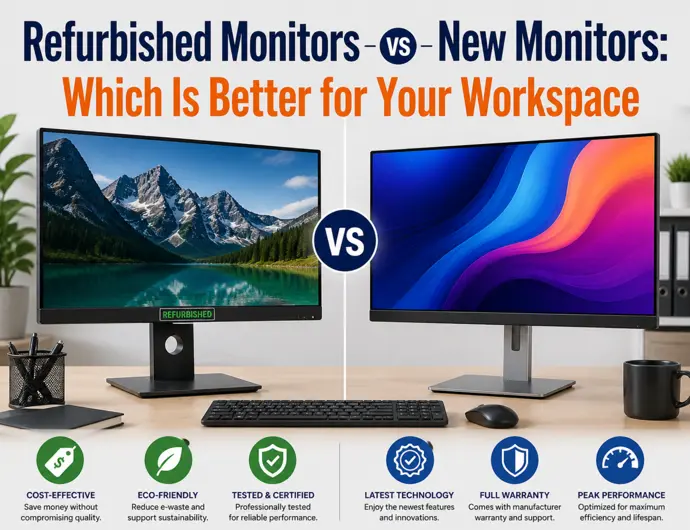
New monitors are factory-fresh devices that come directly from manufacturers or authorized sellers. They feature the latest specifications, untouched components, and often include the newest display technologies such as higher refresh rates, improved color accuracy, and energy-efficient panels.
For many buyers, new monitors represent reliability, cutting-edge performance, and the assurance of a full manufacturer warranty. However, these advantages often come at a significantly higher cost, especially when purchasing in bulk for enterprises.
Cost Comparison and Budget Efficiency
One of the most decisive factors in this comparison is cost. New monitors typically require a larger upfront investment, which can quickly add up for businesses managing large teams or multiple workstations.
Refurbished monitors, on the other hand, provide a cost-effective alternative without compromising on essential performance. Organizations can often save a substantial percentage per unit, allowing them to allocate budgets toward other operational needs such as software, infrastructure, or employee training.
For startups and small businesses, this cost advantage can be a game-changer. It enables access to quality hardware without straining financial resources, making it easier to scale operations efficiently.
Performance and Functionality
A common misconception is that refurbished monitors deliver inferior performance compared to new ones. In reality, many refurbished units originate from high-quality corporate environments where they were used for relatively short periods and maintained well.
For everyday tasks such as document processing, browsing, data analysis, and standard business applications, refurbished monitors perform just as effectively as new models. However, for specialized requirements like high-end graphic design, gaming, or advanced video editing, newer monitors with the latest specifications may offer a noticeable edge.
Ultimately, performance depends more on the specific model and specifications than whether the monitor is new or refurbished.
Quality Assurance and Reliability
Reliability is often a concern when considering refurbished options. However, reputable vendors implement strict testing protocols to ensure each unit meets quality standards before resale. These checks typically include display calibration, pixel testing, connectivity verification, and durability assessments.
New monitors, while unused, are not entirely immune to defects. Manufacturing issues, though rare, can still occur. The advantage with new products lies in their manufacturer-backed warranty, which provides peace of mind.
Refurbished monitors from trusted suppliers also come with warranties, though they may be shorter in duration. This added layer of assurance helps mitigate risks and builds confidence in the purchase.
Environmental Impact and Sustainability
Sustainability is becoming a key consideration for modern businesses. Choosing refurbished monitors contributes significantly to reducing electronic waste and minimizing the environmental footprint of IT procurement.
Manufacturing new monitors involves resource extraction, energy consumption, and carbon emissions. By extending the lifecycle of existing devices, refurbished solutions support circular economy practices and promote responsible consumption.
For organizations with sustainability goals or ESG commitments, adopting refurbished equipment aligns well with environmentally conscious strategies while also delivering financial benefits.
Availability and Variety
New monitors offer the advantage of access to the latest models, designs, and technologies. Buyers can choose from a wide range of specifications, including ultra-thin designs, curved displays, and advanced panel types.
Refurbished monitors, while slightly limited in terms of the latest innovations, still provide a broad selection of reliable models from leading brands. In many cases, businesses can access premium-grade monitors at a fraction of the original cost, which might otherwise be out of budget if purchased new.
This makes refurbished options particularly appealing for organizations seeking quality and durability over cutting-edge features.
Aesthetic Considerations
For some buyers, the physical appearance of monitors plays an important role, especially in client-facing environments or modern office setups. New monitors offer a flawless, pristine look that complements contemporary workspaces.
Refurbished monitors may have minor cosmetic signs of previous use, such as light scratches or slight wear on the casing. While these do not affect performance, they may influence purchasing decisions for those prioritizing aesthetics.
However, many refurbished units are graded based on their condition, allowing buyers to choose products that meet their visual expectations.
Warranty and Support
Warranty coverage is another important aspect to consider. New monitors usually come with full manufacturer warranties that range from one to three years, along with access to official customer support.
Refurbished monitors are typically sold with limited warranties provided by the refurbisher or reseller. While these warranties may be shorter, they still offer protection against defects and functional issues. Choosing a reliable supplier is crucial in this case, as the quality of after-sales support can vary significantly between vendors.
Scalability for Businesses
When it comes to scaling operations, cost and availability become critical factors. Businesses expanding their workforce or setting up new offices often require multiple monitors within a limited timeframe.
Refurbished monitors offer a practical solution for bulk procurement, enabling organizations to equip teams quickly and affordably. This flexibility is particularly beneficial for startups, BPOs, and enterprises managing dynamic workforce requirements.
New monitors, while ideal for high-end setups, may not always be the most economical choice for large-scale deployments.
Long-Term Value Perspective
Looking beyond the initial purchase, long-term value is an important consideration. Refurbished monitors offer lower upfront costs, making them ideal for short- to medium-term use or rapidly changing environments.
New monitors, while more expensive, may provide longer lifespans and access to the latest technology, which can be beneficial for future-proofing certain setups. Balancing immediate savings with long-term requirements is key to making a strategic investment.
Why Businesses Are Shifting Toward Refurbished Options
In recent years, there has been a noticeable shift toward refurbished IT equipment across industries. Companies are recognizing that high performance does not always require brand-new hardware.
Cost optimization, sustainability goals, and the availability of high-quality refurbished monitors are driving this change. Businesses are becoming more practical in their approach, focusing on value rather than just novelty.
Renew TechMart: Delivering Value Through Smart IT Choices
When it comes to sourcing reliable refurbished monitors, choosing the right partner is just as important as selecting the product itself. Renew TechMart has established itself as a trusted provider of high-quality refurbished IT equipment, catering to businesses of all sizes.
The company’s strength lies in its commitment to quality assurance, ensuring that every monitor undergoes rigorous testing and refurbishment processes before reaching customers. This focus on performance and reliability allows businesses to confidently integrate refurbished solutions into their operations.
Renew TechMart also understands the diverse needs of modern workspaces. From startups looking for cost-effective setups to enterprises managing large-scale deployments, the company offers tailored solutions that align with specific requirements.
Another key advantage is their emphasis on sustainability. By promoting refurbished IT equipment, Renew TechMart supports environmentally responsible practices while helping clients reduce their carbon footprint.
Additionally, their customer-centric approach, flexible procurement options, and dependable after-sales support make them a preferred choice for organizations seeking both value and reliability.
By connecting affordability with quality, Renew TechMart bridges the gap between budget constraints and high-performance technology, making it easier for businesses to make smarter IT investments.
Conclusion
The choice between refurbished monitors and new monitors is not about which option is universally better, but rather which one aligns best with your specific needs, budget, and priorities. Refurbished monitors stand out as a cost-effective, sustainable, and practical solution for most business and general-use scenarios. They offer reliable performance, significant savings, and contribute to environmental responsibility.
New monitors, on the other hand, provide access to the latest technology, pristine design, and extended warranties, making them ideal for specialized use cases that demand cutting-edge features. By carefully evaluating your workspace requirements and long-term goals, you can make an informed decision that balances performance, cost, and sustainability. In many cases, the smarter choice lies not in buying new, but in buying wisely.

 Call Now